

The Best Shoes for Achilles Tendonitis
17 April 2026
If you suffer from Achilles tendonitis, you’ll know that footwear can have a significant impact on the frequency - and severity - of symptoms. The tightness, heel pain, and stiffness associated with this condition aren’t fun, so we’ve put this guide together to help you find a pair of shoes that will minimise your discomfort.
We’ll briefly explore what the condition is before moving on to the right type of footwear, the specific features to look for, and other tips for managing your symptoms. Here’s what we’ll cover:
- What is Achilles tendonitis?
- The best shoes to wear for Achilles tendonitis
- Features to look for in shoes for Achilles tendonitis
- Tips on treating Achilles tendonitis
What is Achilles Tendonitis?
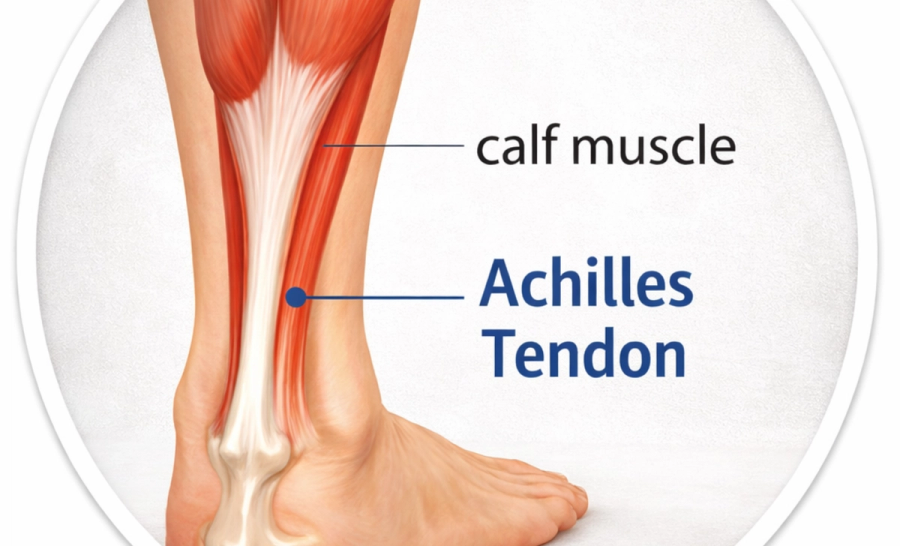
The Achilles tendon is the largest tendon in the body, connecting your calf muscles to the heel bone. It’s named after the mythological figure Achilles, whose professed invulnerability was let down by a small gap in the armour at his ankles, and it’s an appropriate name because injuries to or conditions involving the Achilles can be debilitating.
Achilles tendonitis is caused by overuse or strain, especially from a sudden increase in activity, as well as tight calves, unsupportive footwear, and repetitive stress. It causes small tears and inflammation in the tendon. This manifests as symptoms like pain or stiffness at the back of the heel, usually worse in the morning or after exercise, as well as possible swelling or thickening.
Poor footwear can cause and aggravate the condition, meaning that choosing the right footwear is just as important, in terms of prevention, as a cure.
What Shoes to Wear for Achilles Tendonitis?
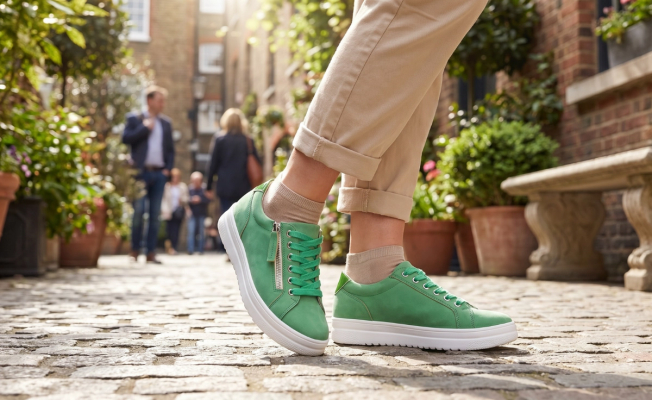
As a general rule, look for shoes that have a moderate drop between the heel and toe, along with a cushioned heel and structured support. Shoe types such as cushioned trainers, supportive walking shoes, or specialist orthopaedic styles are the most appropriate, while flat shoes or high heels are ones to avoid.
This is because heeled shoes and flats both place different kinds of stress on the tendon: heels force the foot into a downward position where uneven stress can cause shortening and stiffening of the tendon, while flat shoes, on the other hand, overstretch the tendon and create strain.
The ideal heel lift is about 2.5-4cm, which can be achieved by the heel itself or by using special inserts to increase the height of your heel within the shoe.
It’s also worth knowing that wide-fit shoes can reduce overall foot strain: an important factor when recovering from Achilles tendonitis. Check out our blog to see if wide-fit shoes are suitable for you.
Features to Look for in Shoes for Achilles Tendonitis
If you’re looking for shoes to prevent Achilles tendonitis or aid with recovery, here are specific features to look for that will help reduce tendon load and minimise discomfort.
Heel-to-toe Drop
Heel-to-toe drop is the height difference between the heel and the forefoot. It’s one of the most important factors for Achilles tendonitis-friendly footwear.
A moderate drop of 6-10mm reduces the stretch load on your Achilles tendon when compared to flat shoes. Anything less than this risks increased stretch, which can be very painful during a flare-up.
If you’ve worn heeled shoes for a long time, transition gradually to a lower heel, as an abrupt change from too-high to just-right can cause more problems.
Cushioned Insoles
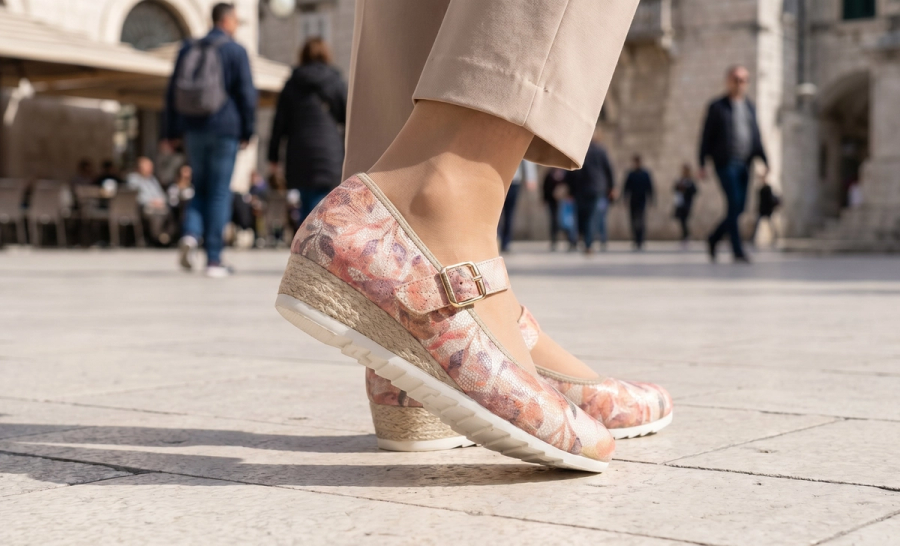
Cushioning absorbs impact that would otherwise travel up through your foot and heel and into the Achilles tendon. Good cushioning reduces the impact of each step you take and is especially noticeable on hard surfaces - where most of us spend a lot of our time walking!
Most shoes have some level of inbuilt cushioning, but there are lots of variations, and we recommend looking for shoes with memory foam insoles. You can also augment cushioning by using removable cushioned insoles. This option allows for custom orthotics if prescribed by a podiatrist, giving you the chance to tailor the cushioning of an existing pair of shoes to meet your needs rather than having to buy a new pair.
Arch Support
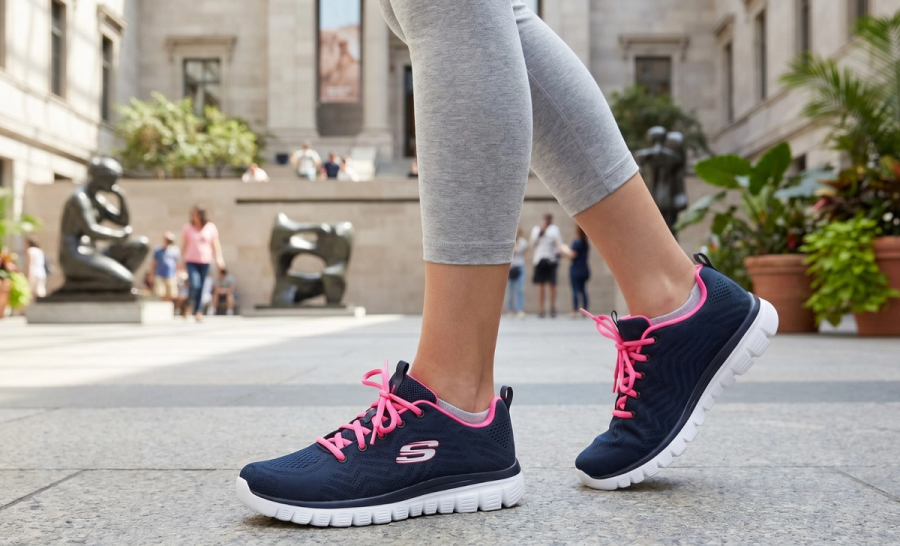
Poor arch support impacts the alignment of your foot within the shoe and can increase strain through the calf and Achilles. If you suffer from flat feet or overpronation, this further increases the load on the tendon, too. Arch support shoes help correct both.
Inbuilt arch support is preferable for shoes you plan to wear frequently, although, as with cushioned insoles, supplementary support can be added later if your current shoes are lacking.
Heel Support & Counter
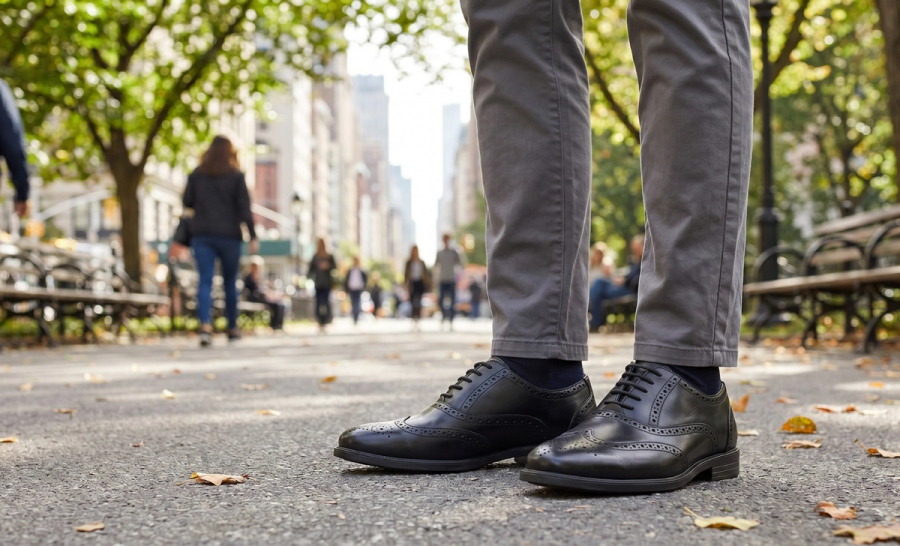
The heel counter is the cup at the back of a shoe that wraps around your heel to provide stability. Good stability at the heel prevents too much side-to-side movement - something that can quickly put lots of strain on the Achilles.
Extra cushioning behind the heel bone reduces friction and impact at the point where your tendon attaches to the heel. For this reason, we recommend avoiding shoes with hard, rigid heels; instead, choose something with padding and structure working together to provide appropriate levels of support.
Shoe Flexibility
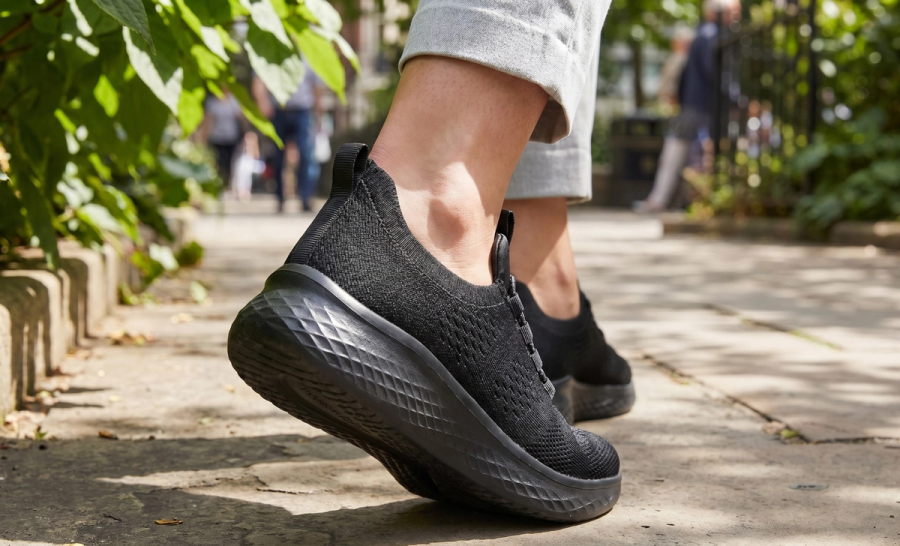
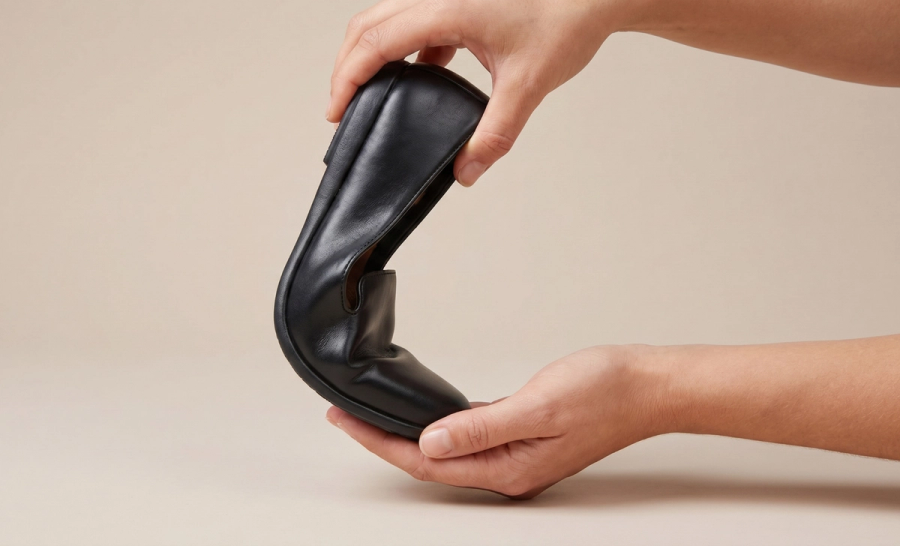
Shoes need to be flexible and supportive to keep your feet comfortable. They should be firm in the midfoot, with natural flex at the ball of the foot. If they’re too flexible (think soft, flimsy soles), your foot has to work harder with each step, translating to additional strain on the Achilles tendon.
Whereas if your shoe is too rigid, the foot can’t move naturally within it. This creates its own set of problems!
A good test is to try to twist your shoe, then try to bend it at the toe. It should resist twisting but give when bent at the toe. If yours behaves differently, it could be a sign that the flexibility levels aren’t right.
Also note that shoes lose structural integrity over time: if you’ve been wearing the same pair for years, it’s quite likely that they’ll be less supportive than is ideal.
Tips on Treating Achilles Tendonitis
Shoes can help prevent and treat Achilles tendonitis, but they’re just one part of a bigger picture. Understanding other ways to treat the condition can greatly relieve your symptoms and the impact they have on your life:
- Rest load and management: reduce high-impact activity, especially during flare-ups, and never be tempted to push through the pain
- Stretch your calves: tight calf muscles increase tension, so stretching them is recommended
- Do heel drops: physios often recommend this exercise - stand with toes on a step, gradually lower your heel below the edge of the step, and repeat
- Apply ice: applying directly to the tendon after activity will reduce inflammation
- See a professional: a GP, physiotherapist or podiatrist can help with management if your tendonitis is getting worse. We recommend having this conversation rather than suffering through it!
Get the Right Shoe to Manage Your Symptoms
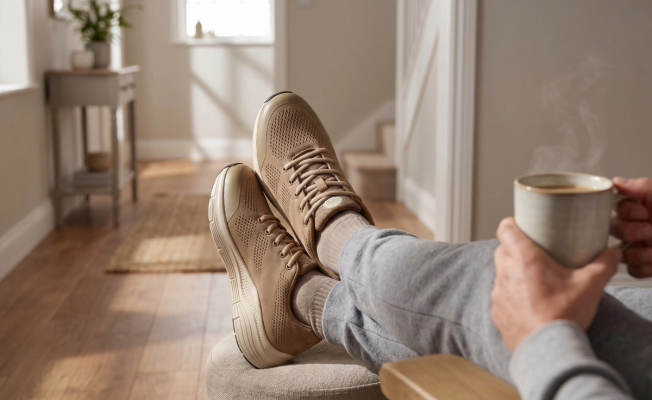
At Pavers, we’re proud to offer a range of shoes that can help to prevent and manage symptoms of Achilles tendonitis. We’ll be happy to help connect you with a pair of shoes to reduce existing symptoms and avoid future flare-ups - just get in touch with our team online or speak to one of our helpful staff members in your nearest store.