
The Best Shoes for Morton's Neuroma
8 June 2026
If you suffer from Morton’s Neuroma, you’ll be familiar with the symptoms - and the discomfort they bring. Burning, tingling or numbness in the ball of your foot, usually between the third and fourth toes, a feeling of standing on a pebble or something equally annoying even when nothing is actually there…
Thankfully, footwear is one of the biggest - and most controllable - contributing factors to the condition and how it presents. It’s our hope that the information in this guide will provide some relief from your symptoms.
Here’s what we’ll cover in this guide:
- What is Morton's Neuroma?
- Things to look for in shoes for Morton's Neuroma
- Tips for reducing Morton's Neuroma pain beyond footwear
What Is Morton's Neuroma?
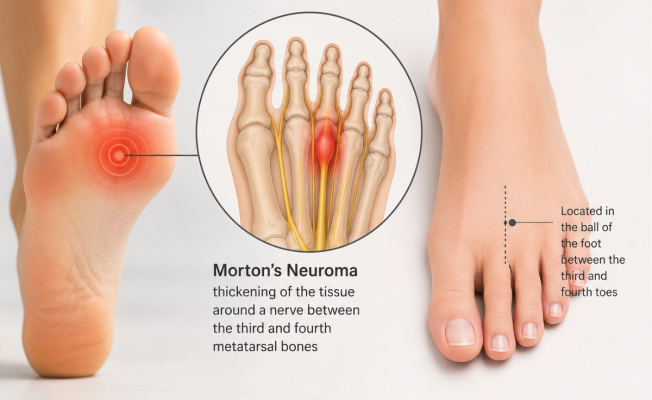
Morton’s Neuroma is a thickening of the tissue around one of the nerves leading to your toes, most commonly manifesting between the third and fourth toes.
Repeated compression of or irritation to the nerve tissue can cause it to thicken over time, leading to the characteristic pain, burning, tingling, and numbness that sufferers will recognise.
The full list of symptoms of Morton’s Neuroma is as follows:
- A burning sensation in the forefoot
- Numbness or tingling in the toes
- Sharp pain when bearing weight
- The sensation of something bunched up under your foot
Common causes of this condition include narrow or tight footwear (the biggest factor), high heels that load too much weight onto the forefoot, high-impact activities, or foot issues like bunions or flat feet.
Footwear has a significant impact on the likelihood of developing Morton’s Neuroma, and its severity. So, choosing the right pair becomes a crucial consideration.
Also note that it’s worth seeing your GP or a podiatrist for formal diagnosis, because self-managing the condition without one can delay proper treatment and cause the condition to worsen. This guide is designed to complement professional advice, not to replace it.
Things to Look for in Shoes for Morton's Neuroma
The right shoes reduce compression in the affected nerve and redistribute pressure to give your foot the space it needs to function naturally. Here are the features of shoes that are less likely to aggravate Morton’s Neuroma.
Wide Toe Box and Fit
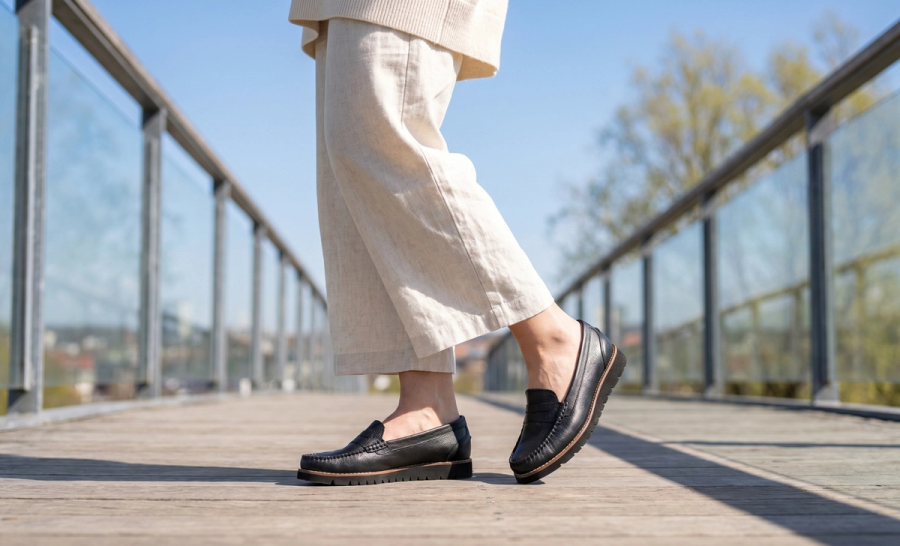
This is the most important feature to look out for. A wide toe box lets your forefoot spread naturally rather than being compressed, and because compression of your toes is one of the main triggers for this condition, a wide fit is able to directly lower the likelihood of this happening.
Shoes with round or square toe boxes are ideal; avoid shoes with a pointed toe.
Wide fit shoes are worth considering even if you wouldn’t otherwise wear them, as the additional space available can make a tangible impact during a Morton’s Neuroma flare-up.
Browse our wide fit shoes for women and men.
Flat or Low Heel
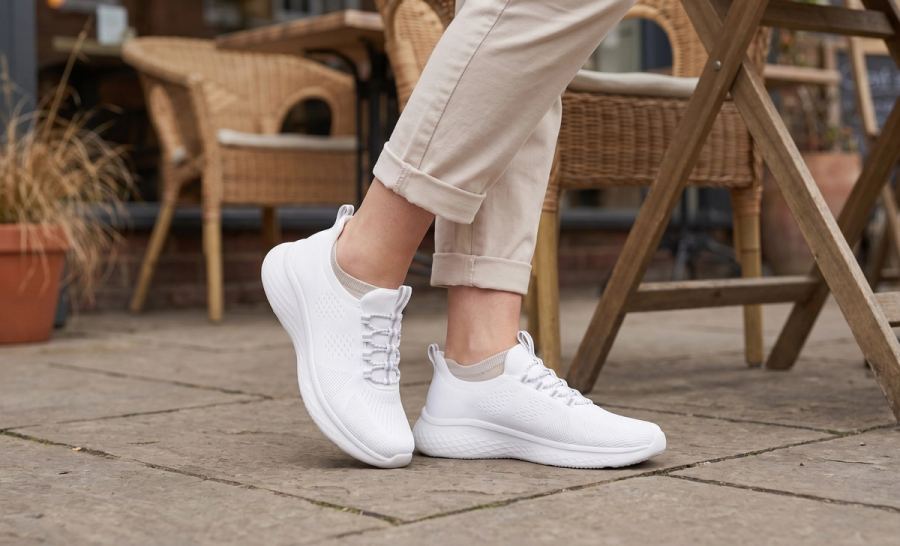
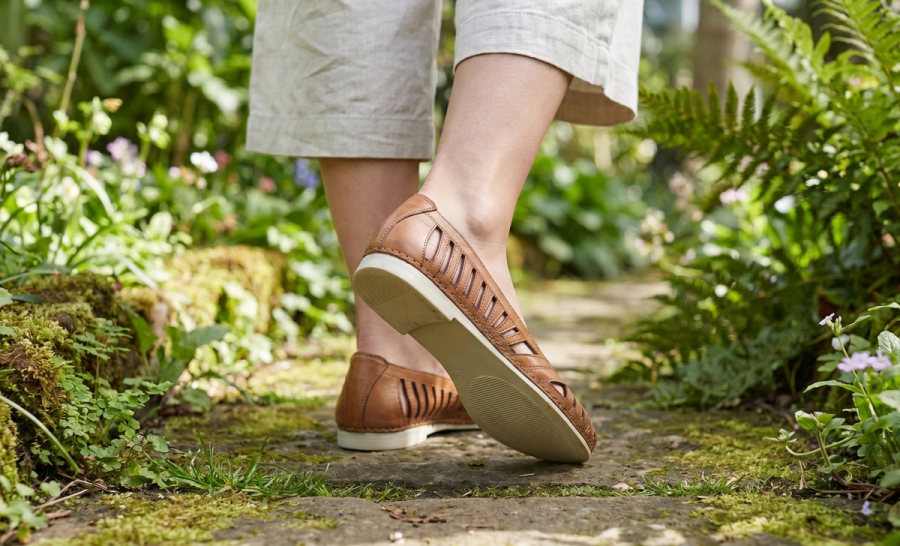
High heels shift your body weight forward, directly onto the site where Morton’s Neuroma causes pain. It doesn’t even have to be a particularly high heel: anything above 2cm or so can cause flare-ups and aggravate symptoms. Try to aim for a completely flat shoe when symptoms are at their worst, with the caveat that they need to provide support, as flat shoes without arch support can cause its own set of problems.
Browse our comfortable flat shoes for women and our arch support shoes.
Cushioned Midsole
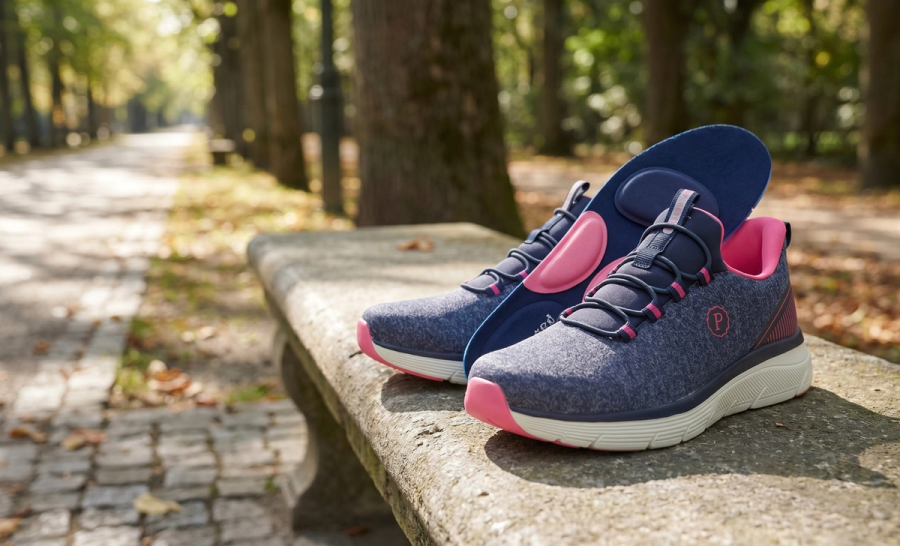
A cushioned midsole absorbs impact at the forefoot, reducing the shock that would otherwise aggravate the compressed nerve that causes Morton’s Neuroma. EVA foam, gel or memory foam midsoles provide good levels of cushioning, with memory foam being particularly effective thanks to its ability to mould around your foot and distribute pressure efficiently.
Removable insoles are worth considering; they give you the option to adapt current shoes rather than purchasing a new pair. They also allow for custom orthotics if these are prescribed.
Metatarsal Support / Pad Compatibility
Metatarsal pads sit just behind the ball of your foot and are effective in redistributing pressure away from the compressed nerve. They are recommended by podiatrists as a way to counter Morton’s Neuroma symptoms, but not all shoes can accommodate them - they ideally need removable insoles and enough depth to fit another pad without causing cramping.
Flexible & Lightweight
Heavy shoes mean your feet have to work harder with each step, increasing muscular effort and worsening irritation. Choosing lightweight shoes is an easy and simple step to reducing this strain, especially if you’re going to be on your feet for long periods.

Avoiding High Heels and Narrow Toe Shapes
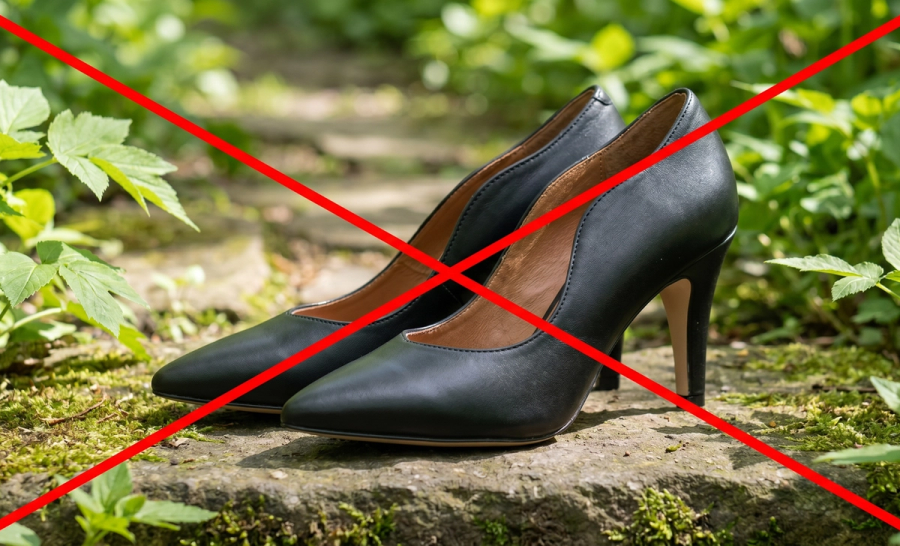
We’ve mentioned both of these points elsewhere, but it’s important to reiterate that high heels and narrow toe shapes both correlate very strongly with Morton’s Neuroma onset and aggravation. Pointed toes compress your toes from the sides, which increases nerve pressure. High heels shift your weight forward and further compound the forefoot compression - taken together, these factors are the perfect combination to cause or worsen the condition.
The advice here isn’t to remove heels from your wardrobe completely. Rather, avoid them during flare-ups and consider limiting height in the long term.
Tips for Reducing Morton's Neuroma Pain Beyond Footwear
As well as footwear decisions, there are some things you can do to reduce the likelihood of developing Morton’s Neuroma or worsening its symptoms:
- Rest and offload as often as possible: reduce time spent on your feet during flare-ups, avoid high-impact activities like running or jumping until your symptoms settle.
- Use metatarsal pads: these can be prescribed and are also available over the counter. Popping them into your shoe to lift and separate your toes is an easy and effective first step.
- Apply ice: holding an ice pack to the ball of your foot for 15 minutes or so after activities that cause aggravation can reduce inflammation and numb the pain.
- Foot massage: a gentle massage of your forefoot and around your toes can further relieve tension. You can even achieve this yourself by gently rolling your foot over a cold water bottle.
- Stretching: toe spreads, calf stretches, and others can help to relieve muscular tension and ease forefoot compression.
- See a podiatrist: if managing your symptoms by yourself is proving ineffectual, a podiatrist can make a formal diagnosis and prescribe appropriate interventions - things like custom orthotics, corticosteroid injections, or referrals to other clinics for further diagnostics.
Finding the Right Footwear Can Make a Difference
The take-home here is that choosing the right footwear can make a tangible impact on the onset and development of Morton’s Neuroma, but it may not always be enough to provide complete relief. Always consider speaking to a GP or a podiatrist if symptoms persist or if the level of discomfort becomes difficult to manage.
If you are looking for shoes to ease Morton’s Neuroma, our wide fit shoes for women and men, along with our flat comfy shoes and arch support shoes, may offer some welcome relief. Please feel free to contact our team or pop into your nearest store if you’d like help finding the right pair.